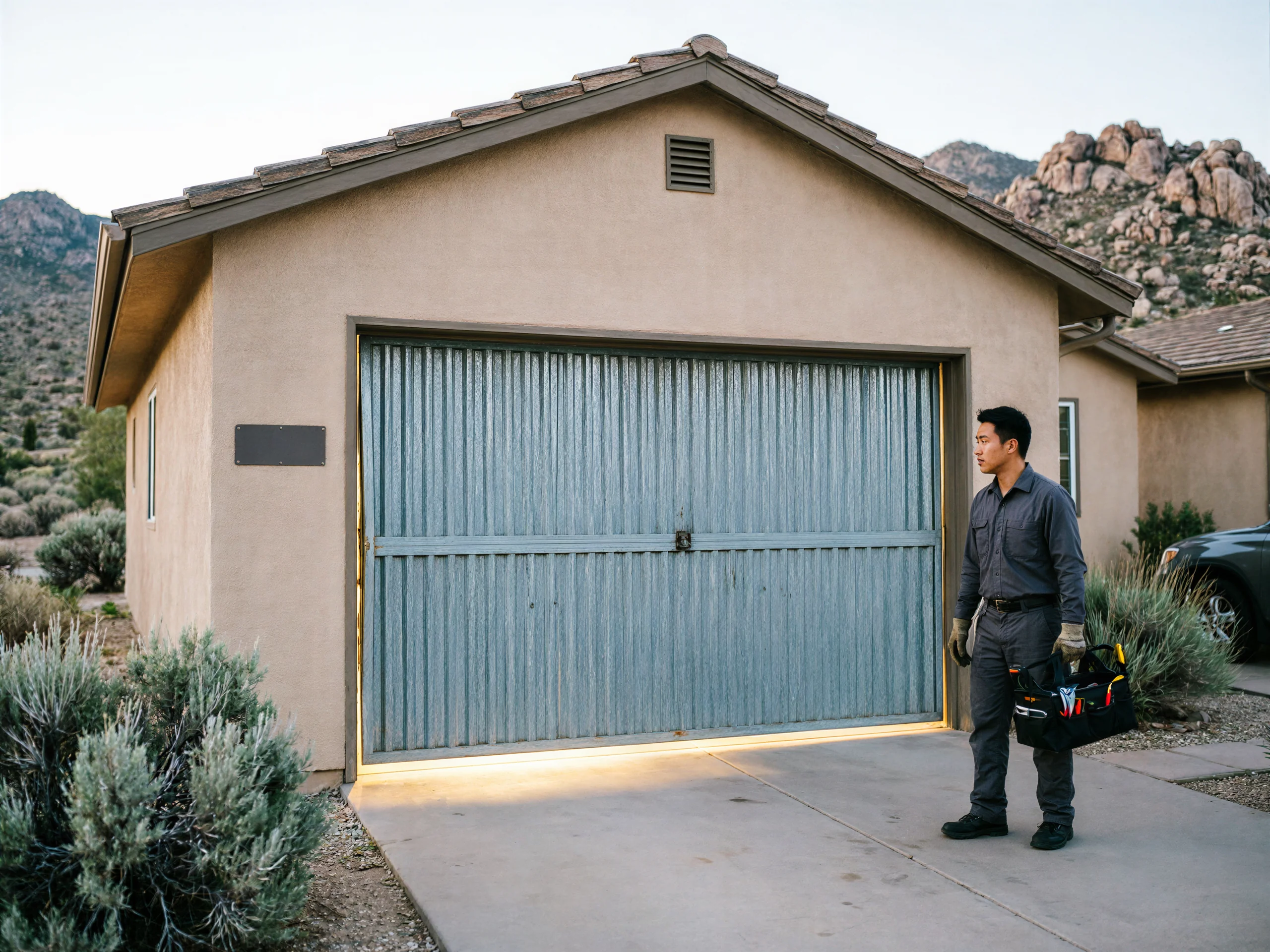
Sierra Vista, AZ
Emergency Garage Door Repair Across the Sierra Vista Area
Broken spring or dead opener at 10pm in Sierra Vista? Same-system know-how for the 1970s-90s door hardware common across this service area.
What the Fix Involves
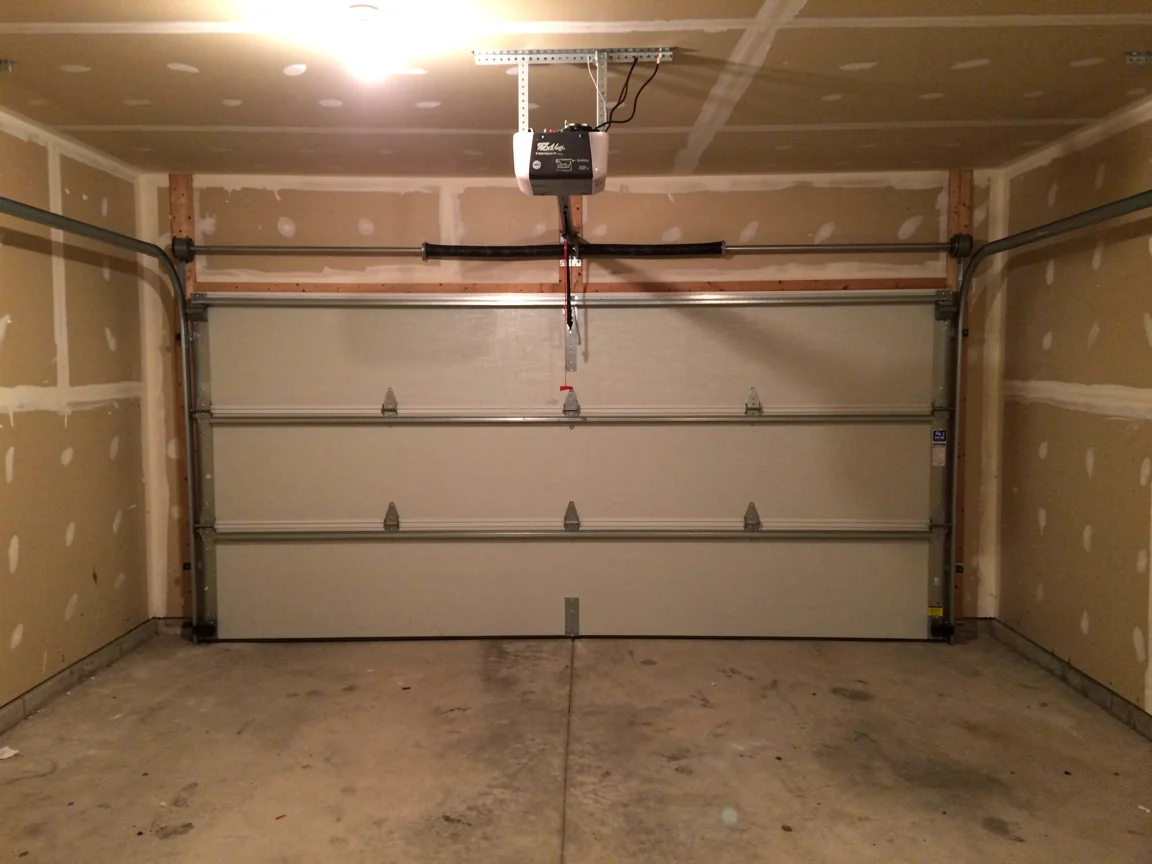
An emergency call almost always comes down to one of three things: a spring that let go, a cable that jumped the drum, or an opener that quit mid-cycle with the door half open.
Stabilizing the door first
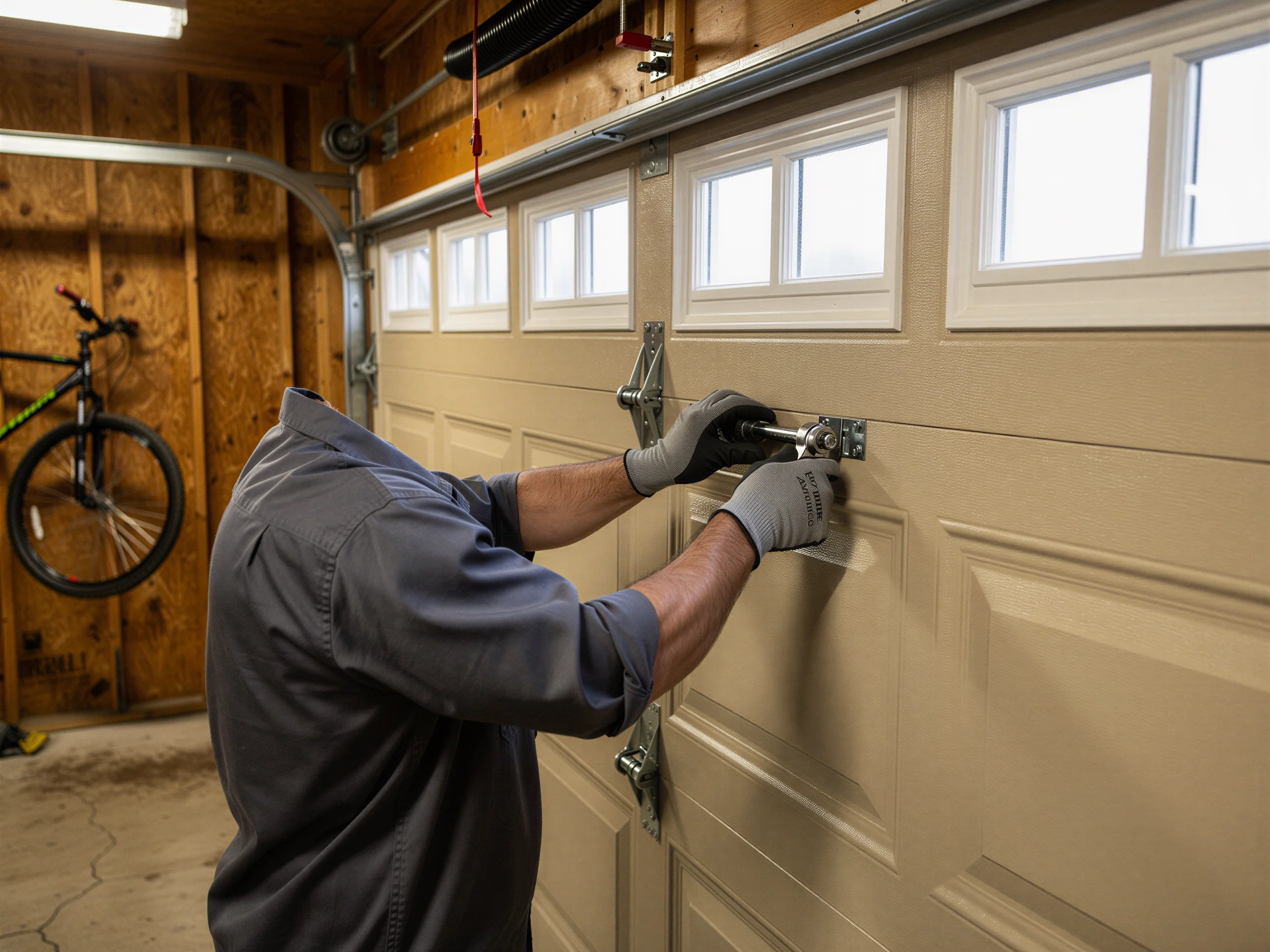
The first job on site is making the door safe to stop worrying about - getting a half-open door either fully closed or fully secured so it isn't a hazard to a car, a kid, or a pet while parts get sorted. For a broken torsion spring, that means winding in a replacement sized to the door's weight, not just grabbing whatever's on the truck.
Diagnosing jumped cables, dead openers
For a jumped cable, it means checking the drum and the track alignment before re-seating it, because a cable that jumped once usually jumped for a reason. For a dead opener, it means figuring out if the motor, the circuit board, or the drive gear failed, since those three failures look identical from the kitchen door at 9pm but need different parts.
Waiting on special parts
One honest limit: if a board or motor needs a specific replacement part that isn't something we stock on the truck, the door gets secured and made safe that visit, and the full repair follows once the part is in hand. We won't pretend a stopgap fix is the finished job.
The Symptom
The call usually starts one of two ways. Either the door won't move at all - opener hums or clicks but the door sits still - or it moved partway and then stopped, sometimes with a loud bang beforehand.
Bang or heavy lift
The bang is almost always a spring. A door that's suddenly heavy to lift by hand, after being fine the day before, is also almost always a spring, since that's the part carrying the door's full weight on a counterbalance.
Reversing doors and sensors
A door that opens fine but reverses itself halfway closed, or won't close at all from the wall button, points at the opener's safety sensors or logic board rather than the springs or cables. A door that's crooked in the opening, higher on one side, usually means a cable has come off a drum or a roller has left the track.
Half-open door security risk
None of these are cosmetic. A door stuck half-open is a way into the house and a way for the desert heat to sit in a garage all day. A door that won't close from the outside at night is a security problem, not just an inconvenience. That's the difference between an emergency call and a repair that can wait for a scheduled visit.
The Complications
The complication in this part of Arizona isn't rust - it's heat cycling. A moderate-heat climate band still means garage temperatures swing hard between a cool morning and a hot afternoon, and that swing works on the metal in springs and on the lubricant in rollers and hinges day after day.
Steel fatigue from cycling
Steel fatigues from that cycling long before it fatigues from age alone, which is part of why a spring can let go on a door that otherwise looks fine. The other complication is what's behind the door. Across this service area, housing mostly dates from the 1960s through the 1990s, with the bulk of stock built between 1971 and 1995.
Older parts off the shelf
Openers and springs installed when those houses were built, or replaced once already in the decades since, are now old enough that exact parts aren't always a shelf item. That's especially true for older chain-drive openers and older-style torsion springs with wind specs that don't match what's commonly stocked today.
Owner-maintained garage doors
Owner-occupied houses make up the majority of homes across the roughly 9,000 households in the service area, which means most garage doors here are being maintained by the people living behind them rather than a property manager on a schedule - so a failure often shows up as a surprise, not a flagged maintenance item.
What Causes It Around Here
Three things line up to make spring and cable failures common across this area rather than occasional. First, the age of the housing: with median construction around 1978 and most stock from the 1970s through the 1990s, a large share of garage doors are carrying original or first-replacement hardware that's well past the design life of a torsion spring under daily heat cycling. Second, the heat band itself - even a moderate heat classification means real daily temperature swings inside an uninsulated garage, and that's the main driver of spring fatigue, more than mileage on the door.
Third, household income across the service area sits around $53,438 median, which tends to mean repairs get deferred rather than done preventively - a spring gets noticed when it breaks, not six months before. None of that is unique to one street or one neighborhood; it's consistent across the towns this company reaches, from Huachuca City five miles out to Tombstone eighteen miles out. The hardware ages the same way whether the house sits five miles from Sierra Vista or eighteen.
Questions
Common questions
How fast can someone get to a broken spring call in Sierra Vista?
We don't quote a blanket response time here since it depends on where in the service area the call comes from and what's already on the schedule. What we can tell you is a broken spring gets treated as the priority it is - a door that won't move safely isn't left for the next business day.
Is it safe to open the door myself if a spring has broken?
No. A broken torsion spring means the door's counterbalance is gone, so the full weight of the door is unsupported. Forcing it open by hand or with the opener can bend track, strip the opener's drive gear, or let the door drop. Leave it closed or wherever it stopped and call for the fix.
Why did my opener work fine yesterday and now won't close the door?
Usually it's either the safety sensors near the floor being knocked out of alignment, or a logic board losing track of the door's position after a power blip. Both are common on openers that have been in service for a decade or more, which describes a lot of units installed when this area's housing was built.
Do you carry parts for older torsion springs and chain-drive openers?
We carry common wind specs and parts on the truck, but some older torsion springs and discontinued opener boards aren't shelf items anywhere. When that happens we secure the door safely on the first visit and source the exact part, rather than install something that's close but wrong for the door.
Explore more
Explore More Services In Sierra Vista, AZ
When a Sierra Vista Garage Door Won't Open
Most Sierra Vista garages went up between 1971 and 1995, and original torsion springs and rollers are wearing out. Learn more →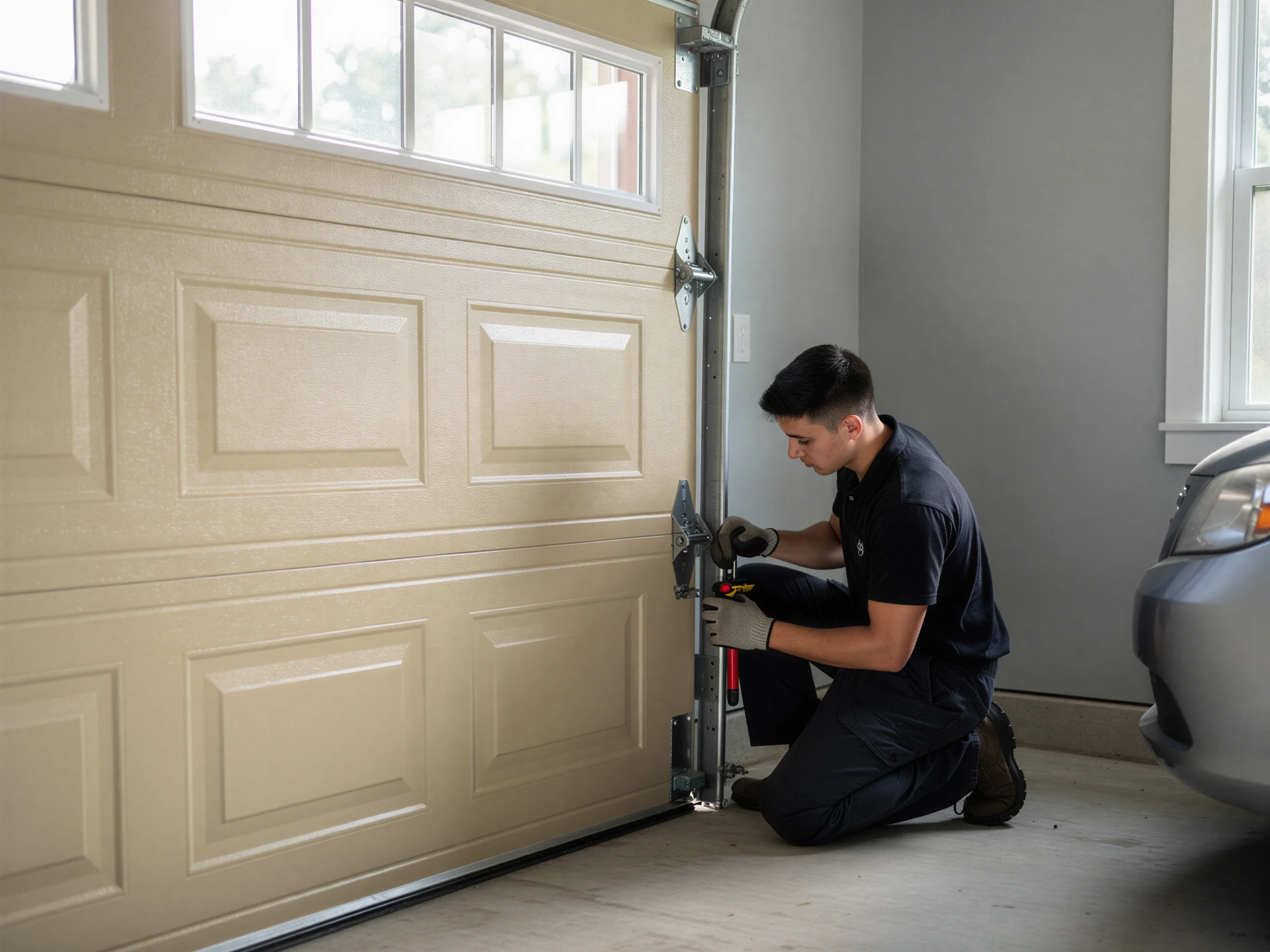
Garage Door Repair for Sierra Vista's 1970s-90s Housing Stock
Garage door repair for Sierra Vista homes built in the 1970s-90s boom years. Learn more →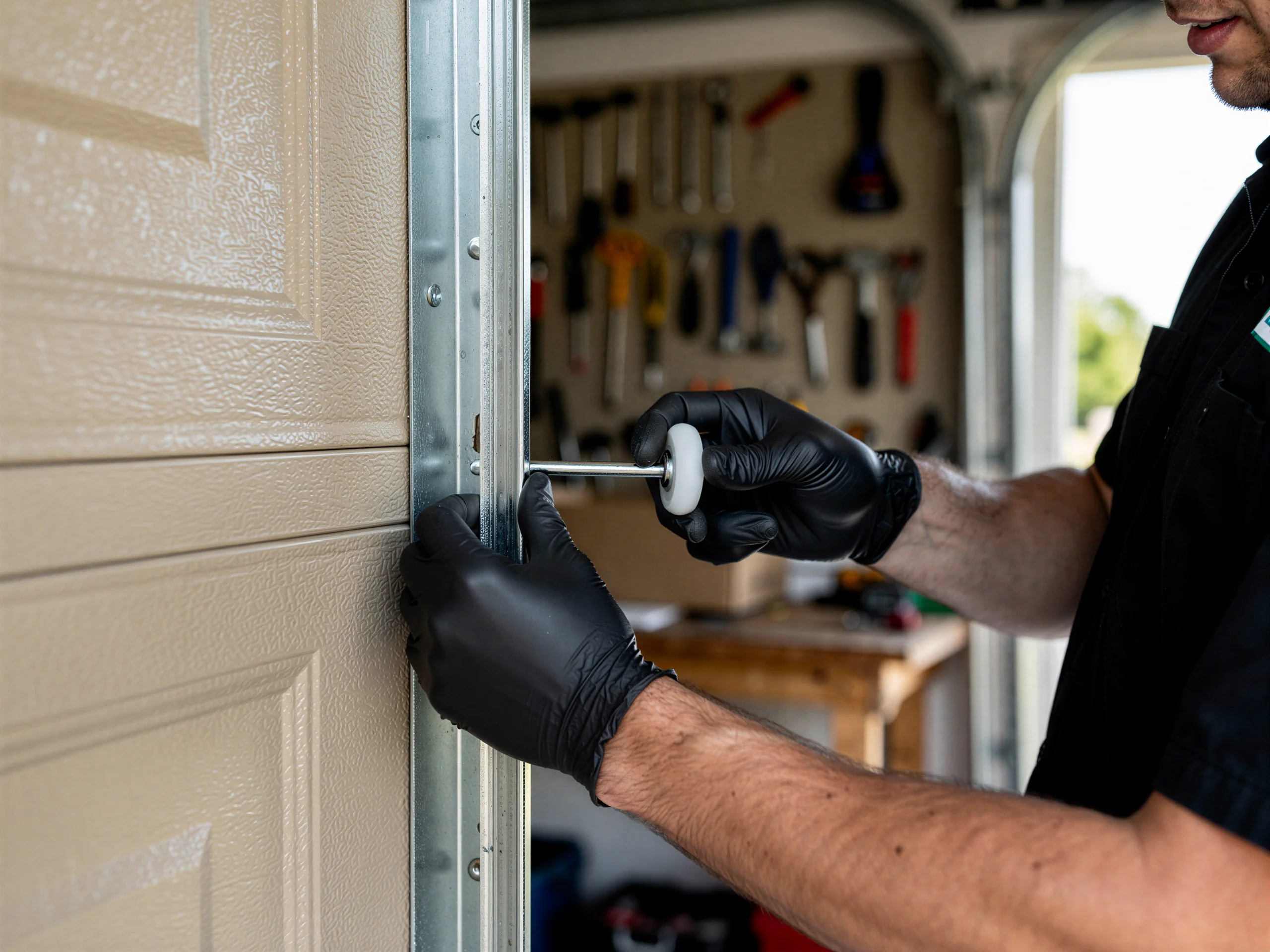
Garage Door Roller Replacement in Sierra Vista
Rollers grinding or jumping track on your Sierra Vista garage door? Learn more →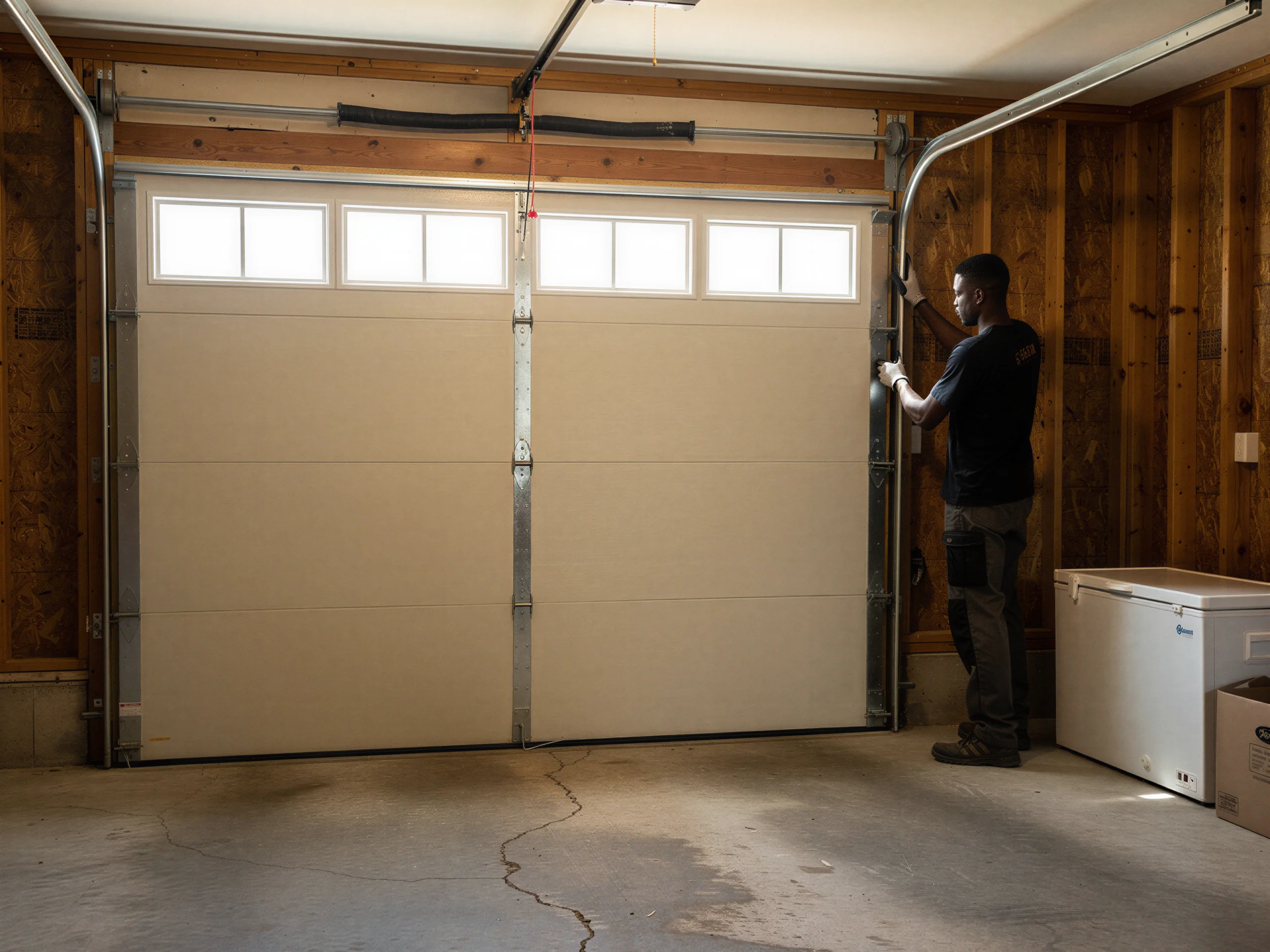
Garage Door Installation Built for Sierra Vista Houses
New garage door installation in Sierra Vista, AZ, sized for the area's 1970s-90s housing stock and moderate heat - not a one-size-fits-all replacement job. Learn more →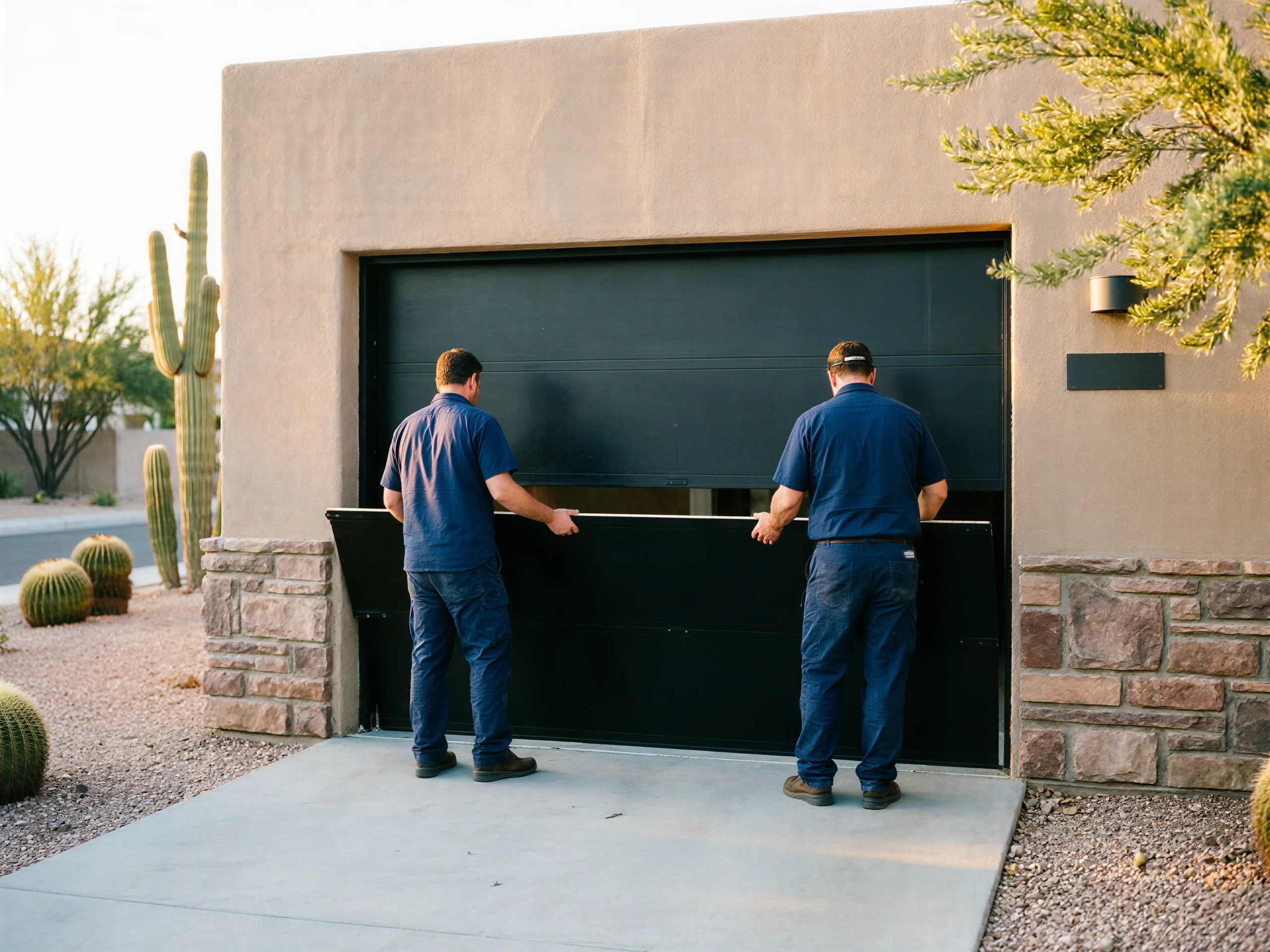
Garage Door Panel Replacement Across the Sierra Vista Area
Dented or cracked garage door panels are common on Sierra Vista's 1970s-80s tract homes. Learn more →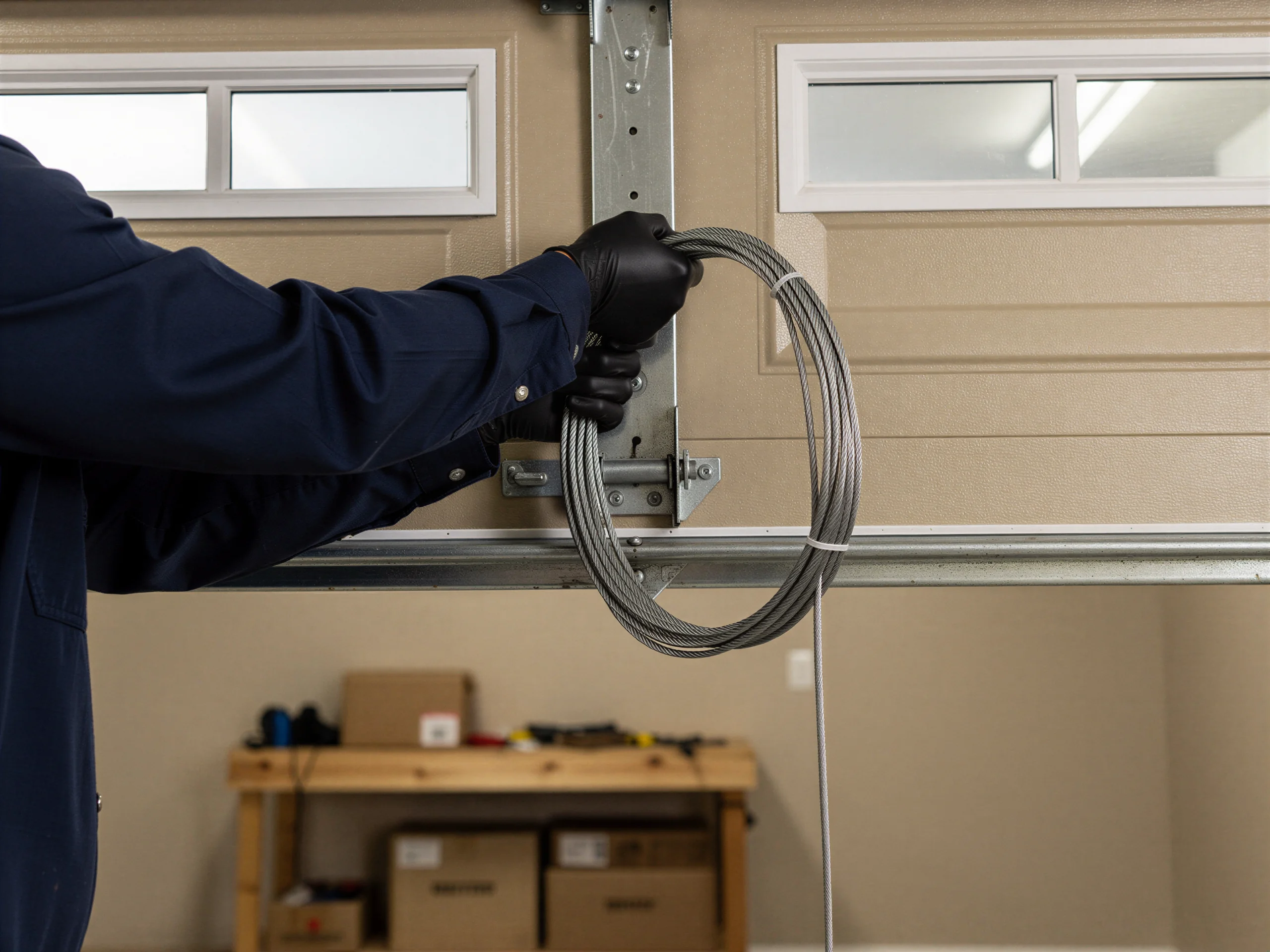
Garage Door Cable Repair in Sierra Vista
Cable repair for Sierra Vista garage doors, most built between 1971 and 1995, where decades-old lubricant dries out fast in the area's steady summer heat. Learn more →Ready when you are
Garage door emergency in Sierra Vista?
Sierra Vista Garage Door Pros repairs and installs garage doors, springs and openers in Sierra Vista, AZ and the surrounding area.